What Are the Four Types of Sprinkler Systems for Altamonte Springs Yards?
Most yards need more than one kind of sprinkler, and knowing what each type does makes it easier to plan a system that waters evenly and wastes less.
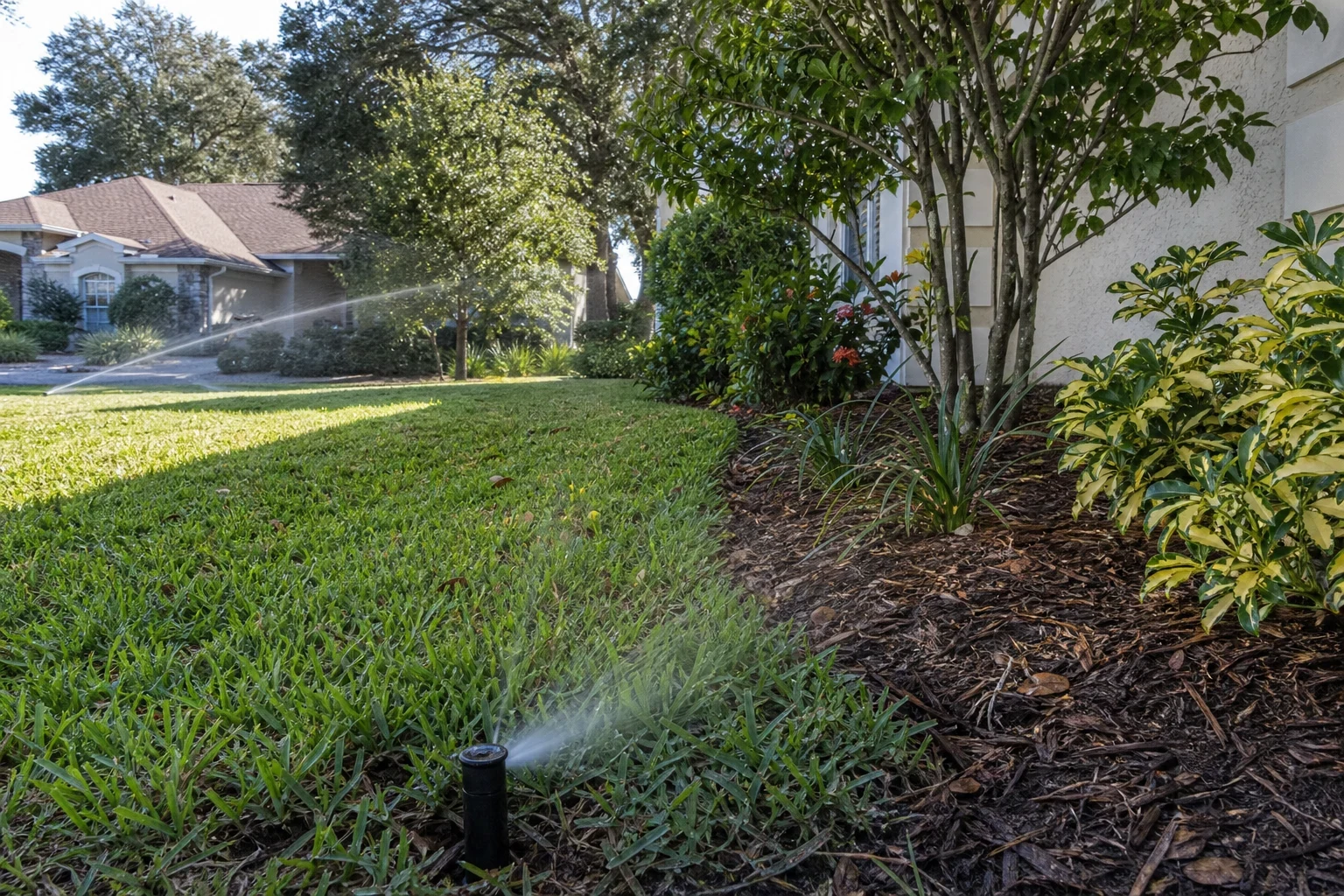
What are the four types of sprinkler systems?
The four main types of sprinkler systems are spray heads, rotors, drip irrigation and bubblers. Spray heads cover small lawn areas, rotors throw water across larger turf, drip feeds beds and shrubs at the root zone, and bubblers soak trees and large plantings. Most well-planned yards combine two or more on separate zones.
Spray heads: the standard for small lawns
Fixed spray heads pop up from the ground and put out a steady fan of water, usually reaching somewhere around 5 to 15 feet. They suit narrow side yards, parkway strips and smaller front lawns where a long throw would hit the driveway or the house.
Spray heads put down water quickly, which is both their strength and their weakness. In sandy soil that drains fast, that works well. On compacted spots or slopes, water can run off before it soaks in, so run times need to be shorter and sometimes split into two cycles.
Nozzles come in fixed patterns such as quarter, half and full circle, plus adjustable versions. Matching the nozzle to the shape of the area is most of what separates a tidy spray zone from one that soaks the sidewalk.
Rotors: better for open turf
Rotor heads send out one or more streams that turn slowly across the lawn. They cover much longer distances than spray heads, so a large backyard can be watered with fewer heads and less trenching.
Rotors apply water more slowly, which gives it time to sink into the root zone instead of puddling. That makes them a good fit for St. Augustine and other turf grasses that do best with deeper, less frequent watering. The trade-off is longer run times per zone, and rotors need open space to throw into, so they rarely belong in tight beds or small lawns.
- Gear-driven rotors: quiet and common in residential yards
- Multi-stream rotary nozzles: fit spray bodies but water more slowly and evenly
- Impact rotors: the older clicking style, still seen on some larger properties
Drip irrigation: water where the roots are
Drip systems use flexible tubing with small emitters that release water slowly at the base of plants. Very little is lost to wind or evaporation, and leaves stay dry, which helps cut down on fungal problems in our humid summers.
Drip is the best choice for shrub beds, foundation plantings, vegetable gardens and containers. It runs under mulch, so it stays out of sight and out of the way of foot traffic. It does need a filter and a pressure regulator at the start of each zone, and emitters can clog if those parts are skipped or never cleaned.
Because drip lines sit near the surface, they can be nicked by shovels or shifted when beds are reworked. When we refresh mulch and beds, we mark and check the tubing first so it keeps working after the new layer goes down.
Bubblers: deep soaking for trees and large plants
Bubblers release a gentle flow of water that pools around the base of a single plant. They are often used for newly planted trees, palms, roses and larger shrubs that need a deep, concentrated drink rather than a light spray.
A bubbler puts out more water than a drip emitter, so the area around it should be fairly level or have a small basin to hold the water in place. They work well on their own zone or mixed with drip where tree roots need extra volume.
How do you choose the right mix for your home?
Start by grouping plants by how much water they need, then assign each group its own zone. Lawns usually get spray or rotor zones, while beds, trees and gardens get drip or bubblers. Putting turf and shrubs on the same zone almost always means one of them is over- or underwatered.
Local watering rules matter too. The water management district that covers Altamonte Springs limits lawn watering to set days and times, and those days change with daylight saving time. A well-zoned system that applies water efficiently lets your yard stay healthy within those limits.
Finally, think about what can go wrong. After a strong storm, fallen limbs and debris can snap spray heads, bury rotors or pull drip lines loose. A quick walk through each zone once the weather clears, watching for geysers, dry patches or soggy spots, catches most damage before it costs you a lawn.
- Small or oddly shaped lawn areas: spray heads
- Large open lawns: rotors or rotary nozzles
- Beds, hedges and gardens: drip
- Trees, palms and large shrubs: bubblers or added drip emitters
More questions about sprinkler types
- Can I put spray heads and rotors on the same zone?
- It is best not to. Spray heads apply water much faster than rotors, so a mixed zone leaves some areas soaked and others dry no matter how you set the timer.
- Do I need a rain sensor on my sprinkler system?
- Florida law requires automatic irrigation systems to have a working rain shutoff device. It keeps the system from running during or right after a good rain, which saves water and protects your lawn from overwatering.
- Can an existing spray zone be converted to drip?
- Often, yes. Many beds that were first watered with spray heads can be switched to drip by adding a filter, pressure regulator and tubing at the existing valve, which usually means much less digging than a new zone.
- How do I know if a head is broken after a storm?
- Run each zone for a few minutes and watch it. A broken head usually shows as a tall spray or bubbling water at the base, while a buried or clogged one leaves a dry circle that will start to brown within days.
Get a clear plan for your sprinkler zones
We can walk your yard, look at how each zone waters today and explain which head types fit your lawn and beds. You get a free estimate that lists the work in plain terms, whether that is a few repairs after a storm or a new layout.