ServicesIrrigation
Irrigation Repair and Installation in Altamonte Springs
We repair, adjust and extend sprinkler systems so every zone waters evenly and within the rules. That includes heads and lines broken by fallen limbs or heavy equipment. You get a clear walkthrough, a written estimate and a system that runs quietly in the background.
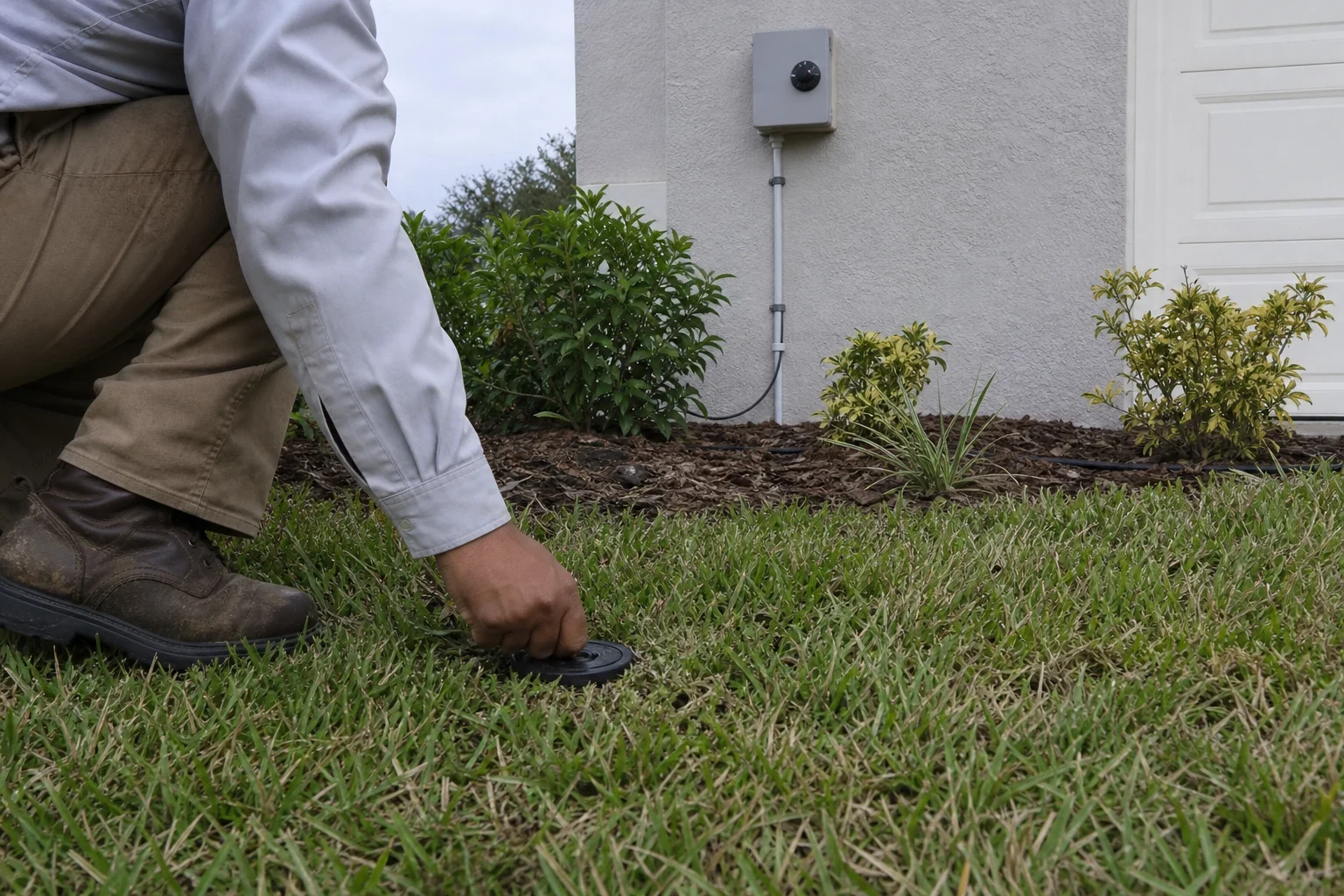
A sprinkler system that waters what it should
Most irrigation trouble starts small. A rotor tilts after a mower clips it, a spray head clogs with sand, a valve sticks open overnight. Weeks later you have a brown patch in the St. Augustine and a soggy bed by the driveway. We trace the cause instead of turning up the run time.
Storms add their own damage. Falling branches snap risers, uprooted shrubs pull lines apart, and tree crews or trucks can crush shallow pipe under the lawn. After a blow we check each zone, mark what was hit and repair it before dry weeks stress the grass.
We are a family-owned business, licensed and fully insured, and we treat your yard the way we would want ours treated: careful trenching, turf set back in place, nothing left behind.
What we check, fix and fine-tune
- Full system run-through
- Each zone is switched on in turn while we look for heads that sit buried, lean, clog or throw water onto the house, the street or the fence.
- Head, nozzle and riser repair
- Broken spray heads and rotors are replaced with matched nozzles so the zone puts down an even rate. Mixing nozzle types on one zone is a common cause of dry spots.
- Line and valve repair
- We dig carefully to cracked PVC or leaking fittings, repair them and test under pressure before backfilling. Sticking or weeping valves are rebuilt or replaced.
- Controller and rain sensor
- We program your controller to the local watering days and install or replace the rain sensor Florida law requires on automatic systems. Smart controllers are available if you want weather-based scheduling.
- Drip for beds and new zones
- Planting beds do better on low-volume drip than on overhead spray. We convert bed zones or add new ones when you put in sod or a new landscape design.
Signs your irrigation needs attention
Dry patches in a watered lawn
Circular brown areas between heads usually mean poor coverage, a clogged nozzle or low pressure on that zone.
Puddles or a soft spot that stays wet
Standing water near a head or along a line often points to a cracked pipe or a valve that never fully closes.
A water bill that jumped
A hidden leak or a zone running on the wrong days can quietly double your usage.
Damage after a storm
Snapped heads, exposed pipe where a tree came up, or tire ruts across the lawn are worth checking before the system's next run.
Spray hitting walls and pavement
Water on siding, the driveway or the street is wasted and can stain surfaces over time.
What shapes the cost of irrigation work
A single broken head is a small job. Several damaged lines after a storm, or a full zone redesign, takes more time and parts. We price from what we find on the walkthrough and explain each line before any work starts.
Number of zones affected
Repairs on one zone cost less than rebalancing an entire system with mismatched heads.
Where the damage is
Pipe under a driveway, beneath tree roots or inside a dense bed is slower to reach than a line under open lawn.
Age of the system
Older systems may need valve or controller replacement, and parts for discontinued heads are not always available.
Upgrades you choose
Drip conversion, a smart controller or new zones for added plantings add materials and labor. If a bigger project makes sense, you can spread the cost with our financing: up to $100,000, terms from 2 to 12 years, and no penalty for paying it off early.
How an irrigation visit runs
- 1
Walkthrough and test
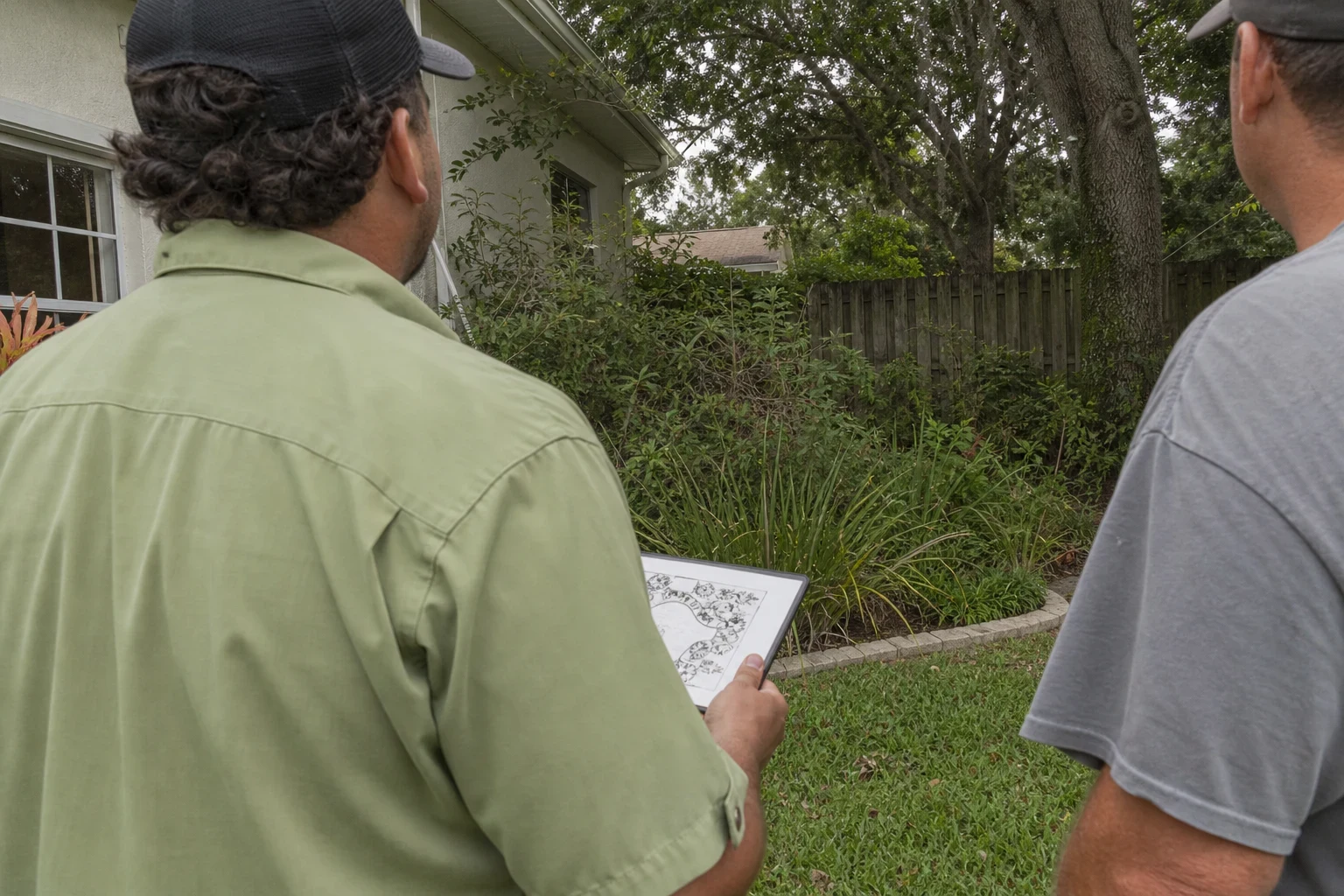
We meet you on site, run each zone from the controller and walk the yard with you. You see what we see, including any storm damage.
- 2
Written estimate
You get a line-item estimate that separates simple repairs from upgrades, so you can decide what to do now and what can wait.
- 3
Repairs with care
We cut turf neatly, set it aside on a tarp, make the repair and test it before the soil goes back. Beds and walkways are protected while we work.
- 4
Programming and handoff
We set run times and days for each zone, confirm the rain sensor works, and show you how to pause or adjust the schedule.
Irrigation questions we hear often
How often should my sprinklers run?
The water management district sets watering days for this area, generally two days a week during daylight saving time and one day a week in winter, with no watering in the middle of the day. We program your controller to those rules and adjust run times to your soil and grass. Sandy soil drains fast, so shorter, well-timed cycles often work better than long ones.
A tree came down in the storm. Should I run my system?
Hold off until someone has looked. A broken line can wash out soil and waste a lot of water in one cycle. Turn the controller off or set it to rain mode, and we will check each zone and repair what was hit, often alongside our tree trimming and removal crew.
Do I really need a rain sensor?
Yes. Florida law requires one on automatic systems, and it saves water and money by skipping cycles after a good rain. Sensors wear out, so we test yours on every visit.
Is it better to repair or replace my system?
Most systems can be repaired. We recommend replacement only when pipe is brittle throughout, parts are no longer made, or the layout no longer fits your yard. Our estimate shows both options when that question is close.
Can you add irrigation when I put in new sod or beds?
We can. New sod needs steady watering to root, and new beds do best on drip. We plan the zones with the sod installation or mulch and beds work so everything is ready on the same schedule.
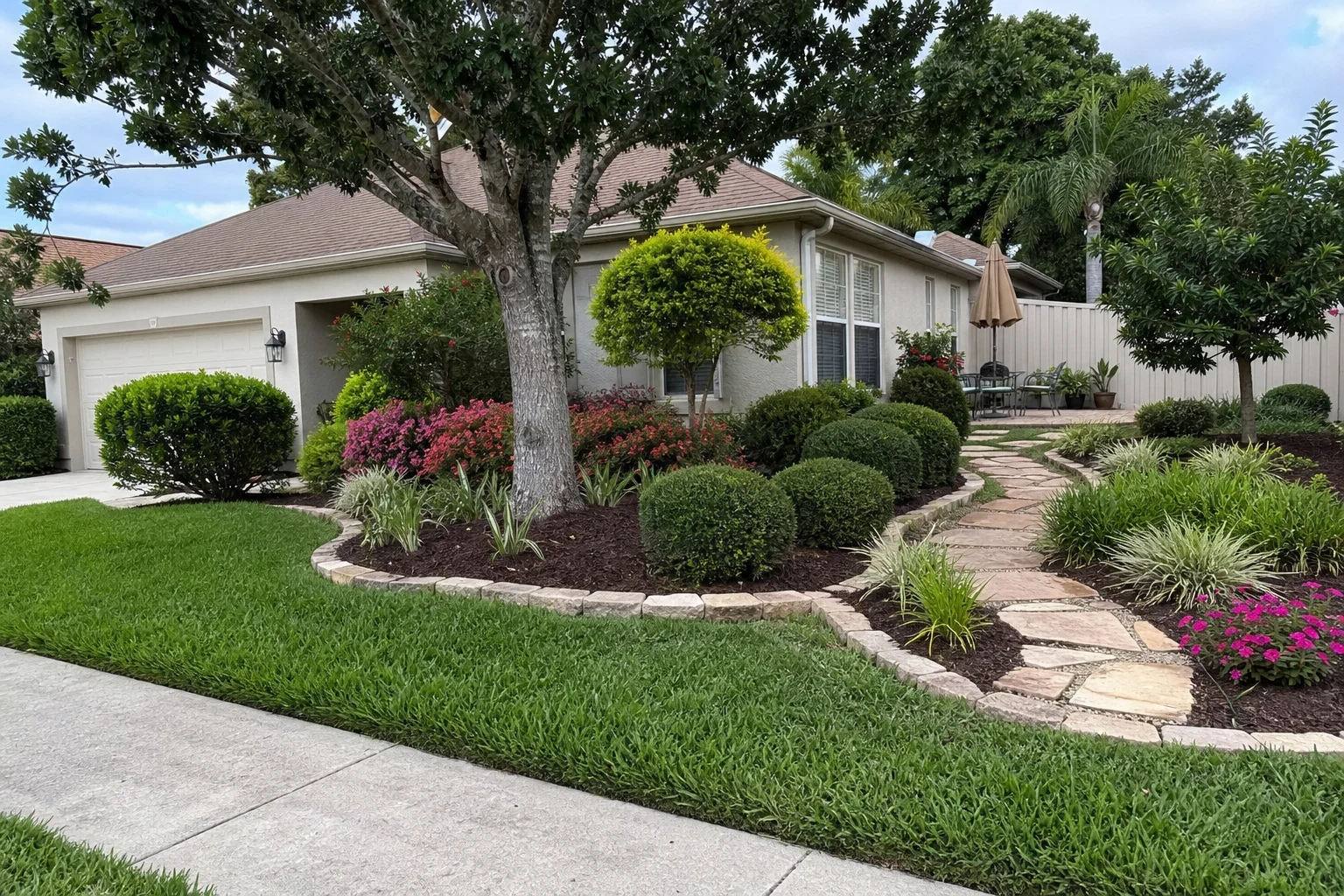
Get your system checked before the next dry spell
We will walk the yard with you, run every zone and give you a written estimate at no cost. It is the simplest way to know what your irrigation needs.