ServicesLawn Care
Lawn Care in Altamonte Springs
We mow, feed and watch over your lawn on a steady schedule, so the grass stays thick enough to shrug off summer downpours, pests and fallen debris. When weather does damage, we already know your turf and can set out a sensible plan to bring it back.
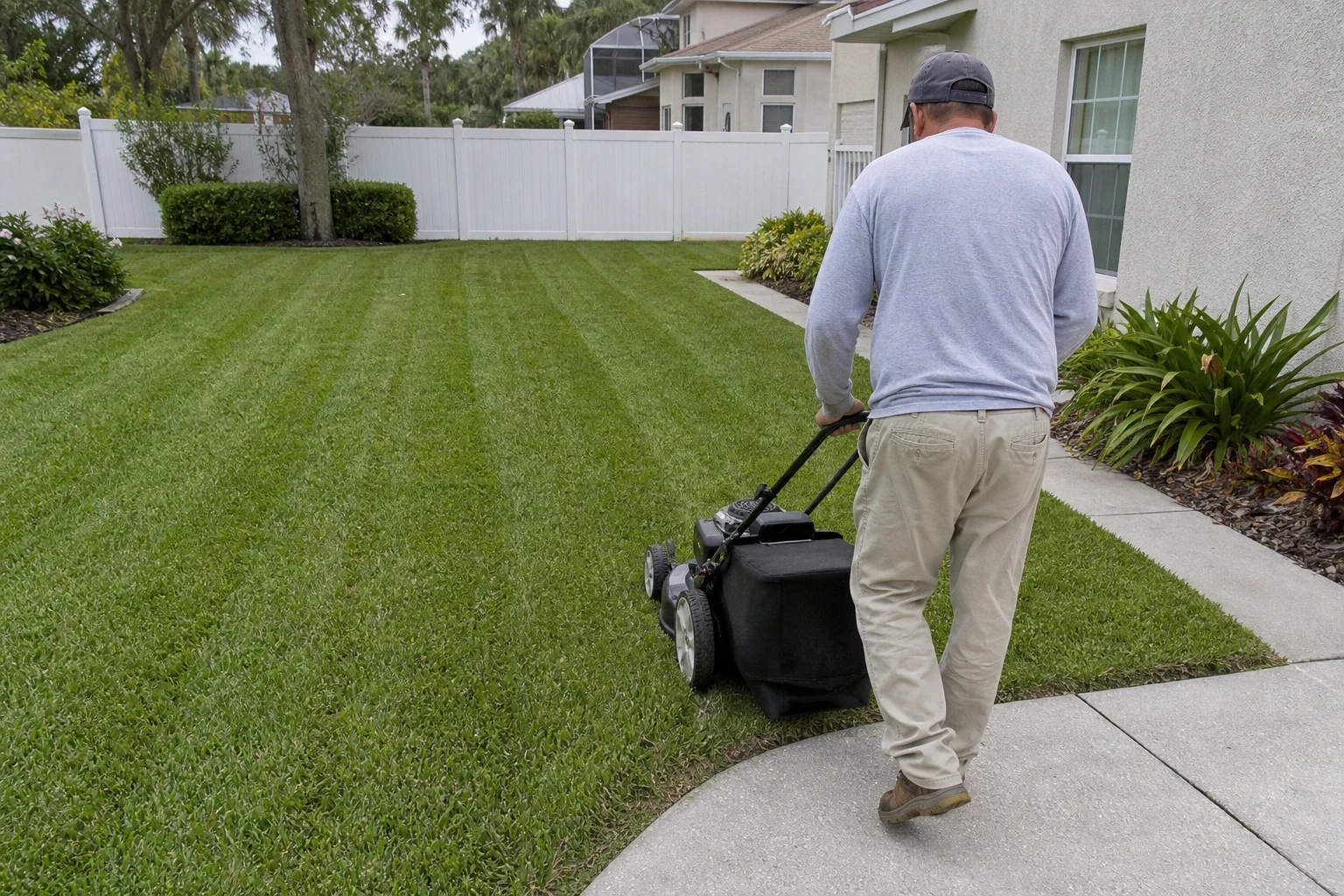
A lawn that is looked after, not just cut
Good lawn care is mostly attention. Most lawns around Altamonte Springs are St. Augustine, with some zoysia and bahia, and each wants a different mowing height, feeding schedule and eye for trouble. We set the deck high for St. Augustine, keep blades sharp so the leaf is cut cleanly instead of torn, and note anything that looks off before it spreads.
The reasoning is simple. A healthy, well-rooted lawn recovers from a tropical storm or a week of standing water far faster than a stressed one. So regular care is the groundwork, and when bad weather does leave matted grass, washed-out edges or limbs across the yard, we help you sort out what needs attention now and what can wait.
We are a family-owned business, licensed and fully insured, and we treat your home the way we would want ours treated: gates closed, beds left tidy, clippings blown off the drive and walks.
What our lawn care includes
Mowing at the right height
St. Augustine is kept tall, around three and a half to four inches, which shades out weeds and holds moisture in sandy soil. Zoysia and bahia get their own settings. We alternate mowing patterns so the turf does not rut.
Edging and trimming
Clean edges along driveways, walks and bed lines, with string trimming around fences, trees and fixtures. We take care around young trunks so the bark is not nicked.
Feeding and weed control
Fertilizer is timed to the growing season and to local rules on summer nitrogen use. Weeds are treated selectively, since many broadleaf products can stress St. Augustine in high heat.
Pest and disease checks
On every visit we look for chinch bug damage in sunny, dry patches and the brown rings of large patch fungus in cooler, damp months. You hear from us about what we found and what we suggest.
Post-storm lawn check
After heavy weather we walk the lawn, clear light debris and tell you plainly whether the grass will recover on its own or needs help such as new sod or an irrigation repair.
Signs your lawn needs regular care
Yellow or straw-colored patches
Patches that spread outward in full sun often point to chinch bugs, not a lack of water. Watering more will not fix it, and the damage grows quickly in summer.
Thin grass and creeping weeds
When the turf thins, dollarweed, crabgrass and sedge move in. Mowing too short is a common cause, and it is easy to correct.
Grass that stays matted after rain
Turf that lies flat or smells sour after a heavy downpour may be sitting in poorly drained soil. A closer look tells you whether grading, aeration or new sod makes sense.
Scalped or uneven mowing
Bald strips on high spots and torn, brown blade tips mean the mower is set too low or the blades are dull. Both invite disease.
How a lawn care visit runs
- 1
Walkthrough and estimate
We come out, look at the grass type, sun, soil and drainage, and ask how you use the yard. You get a free estimate that lists what each visit covers.
- 2
A schedule that fits the season
Visits are more frequent through the rainy summer growing season and ease off in the cooler months, when the grass slows down.
- 3
The visit itself
We mow, edge, trim and blow off hard surfaces, then walk the lawn for signs of pests, fungus or irrigation trouble. Gates are latched and pets are kept in mind.
- 4
Notes and next steps
If something needs attention, we tell you what we saw and what we recommend. Nothing extra is done without your say-so.
What shapes the cost of lawn care
Lawn care is priced per visit or as a seasonal plan, and the figure depends on your yard rather than a flat rate. We explain each line on the estimate so you know what you are paying for and why.
- Lawn size and layout
- Square footage matters, but so do slopes, narrow side yards and the number of beds, trees and obstacles to trim around.
- Visit frequency
- Weekly summer mowing costs more over a season than every other week, but it keeps St. Augustine from getting tall, stemmy and prone to scalping.
- Treatments added
- Feeding, weed control and pest treatments are priced on what your lawn actually needs, not as a fixed bundle.
- Condition at the start
- An overgrown or weather-damaged lawn may need a first cleanup visit before regular care begins. Our seasonal cleanup and property cleanup services cover heavier work.
Lawn care questions
Something not covered here? (407) 269-5989
How often should my lawn be mowed in summer?
For most St. Augustine lawns, weekly during the rainy season keeps growth even and avoids cutting off too much leaf at once. In the cooler months every two weeks is usually enough. We will suggest a schedule after seeing your yard.
Can you tell why my grass is turning brown?
Usually, yes. The pattern tells a lot: chinch bug damage shows up in hot, sunny spots, fungus tends to form rings, and irrigation gaps follow the sprinkler layout. If watering is the cause, our irrigation service can check the heads and zones.
What happens to my lawn after a big storm?
We check it on the next visit, or sooner if you ask, clearing light debris and looking for standing water, scalped areas or fallen limbs. Fallen trees or large limbs are handled through our tree trimming and removal service. You get an honest read on whether the grass will come back or should be replaced.
Do I need to be home for visits?
No. As long as we can get through the gate and pets are inside, we can work while you are out. We leave things as we found them.
Is it better to fix a patchy lawn or start over with sod?
Small thin areas often thicken up on their own with better mowing and feeding, since St. Augustine spreads by runners. If more than about half the lawn is weeds or bare soil, sod installation is usually the faster, more reliable route. We can look at it with you and give you a straight answer.
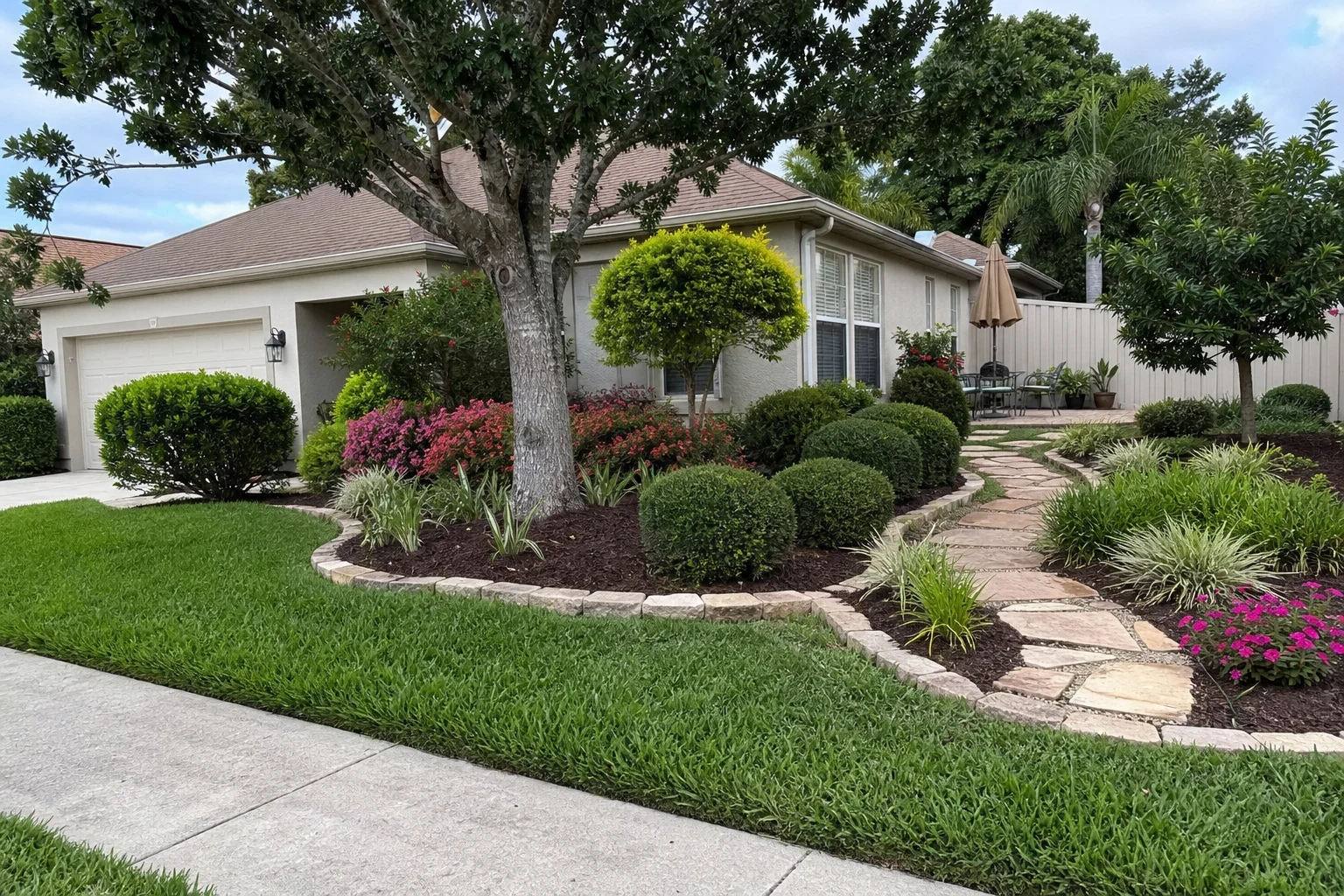
Let us take a look at your lawn
We will walk the yard with you, point out what is working and what is not, and give you a clear plan for regular care. If your plans grow into a bigger project, we offer financing of up to $100,000, with terms from 2 to 12 years and no penalty for paying it off early.