ServicesPalm Tree Pruning and Removal
Palm Tree Pruning and Removal in Altamonte Springs
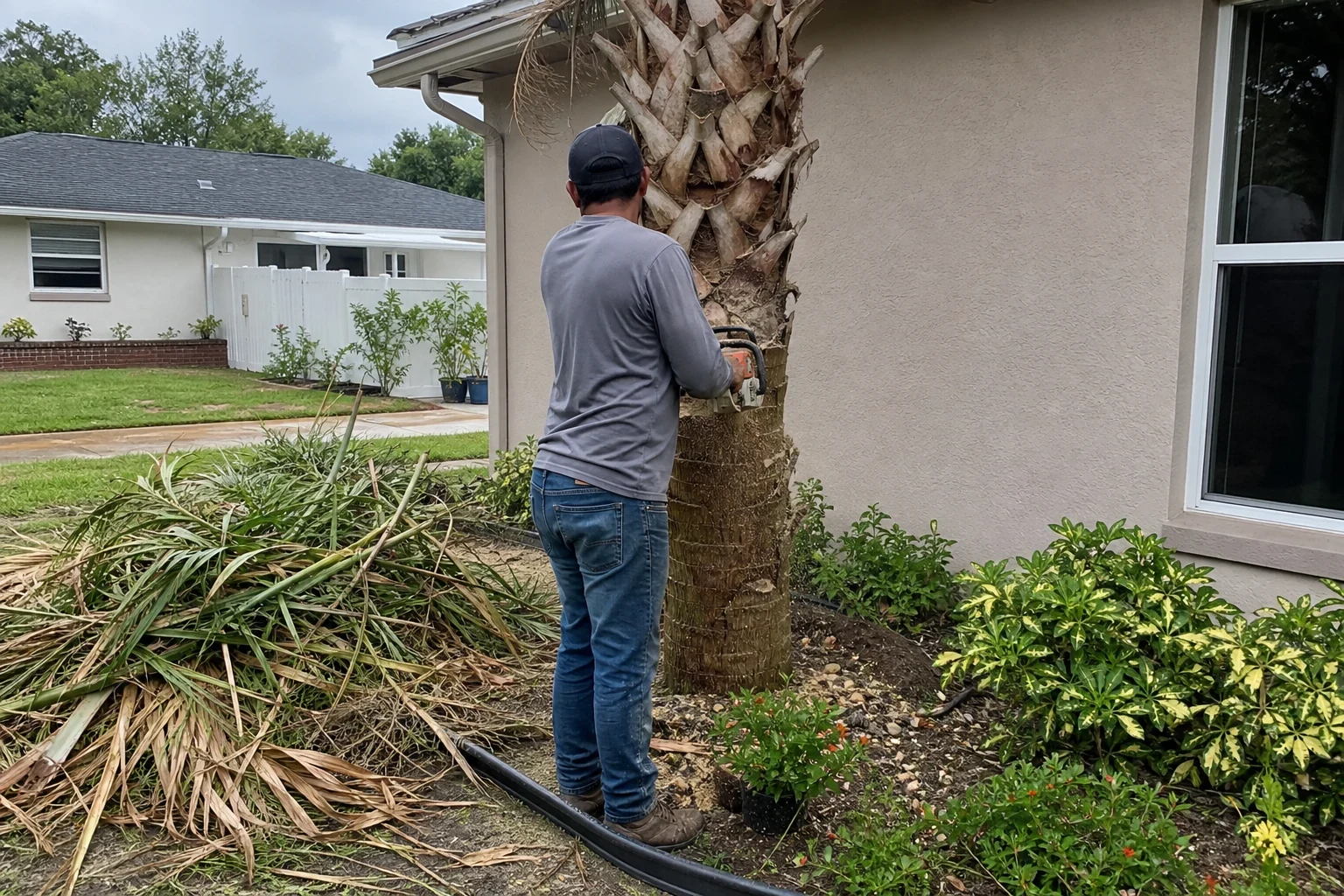
We prune palms the way they grow best, taking only dead and failing fronds and the heavy seed stalks. When a palm is diseased, leaning or broken after a storm, we take it down in measured sections and leave your yard clean.
Pruning that protects the palm, removal when it can't be saved
A palm has one growing point, the bud at the top of the trunk. It cannot replace a damaged crown the way an oak grows new limbs, so every cut matters. Our pruning removes brown and drooping fronds, loose boots and flower or seed stalks, and stops there. Green fronds feed the tree, so we leave them.
After a storm, the right move is often less dramatic than it looks. A palm that lost a few fronds usually recovers. One with a bent or snapped crown, a split trunk or a new lean toward your home does not, and we will tell you which you have. For broadleaf trees on the same property, see our tree trimming and removal service.
What our palm work includes
- Dead frond and boot removal
- We cut fronds that are fully brown or hanging below horizontal, close to the trunk without nicking it. Loose boots on sabal palms come off when they release cleanly.
- Seed and flower stalk removal
- Queen palms and date palms drop heavy fruit clusters that stain pavers and draw pests. Removing the stalks keeps patios and pool decks cleaner.
- Clean tools between palms
- Fusarium wilt spreads on pruning blades, especially among Canary Island date palms. We clean our saws between trees so one sick palm stays one sick palm.
- Sectional palm removal
- Tall palms come down in controlled pieces rather than in one fall, which protects roofs, screen enclosures and fences. We haul away the trunk and fronds.
- Health check while we're up there
- We look for yellowing patterns, frizzled new growth and conks at the base, then explain what we see in plain terms.
Signs your palm needs attention
A skirt of brown fronds
Dead fronds catch wind, shelter rodents and fall without warning. They are the most common reason to prune.
Crown damage after a storm
A bent, snapped or hanging crown means the bud is likely lost. That palm will not recover and should come down before it falls on its own.
Shelf-like growths at the base
Hard, shelf-shaped conks low on the trunk are a sign of Ganoderma butt rot. Nothing treats it, and the rot hollows the wood from within, so taking the palm down is the safe choice.
A new lean
If a palm leans more than it did last month, the root plate may have shifted in saturated soil. Keep people clear and have it looked at soon.
Fronds browning from the bottom up fast
Rapid browning on sabal or date palms can signal lethal bronzing. Early identification helps you decide what to do with nearby palms.
What shapes the price of palm work
Palm pricing depends mostly on height, the number of palms and how easily we can reach them. A cluster of low pygmy date palms is a different job from one tall Washingtonia beside a screen enclosure. Your estimate lists each palm so you see where the cost comes from. Bigger projects can be financed, with amounts up to $100,000, terms anywhere from 2 to 12 years and no penalty for paying it off early.
Height and species
Taller palms need lifts and more time. Canary Island date palms have heavy, thorned fronds that take longer to cut and handle.
Access and what's underneath
Palms over a roof, pool cage or driveway need careful lowering and sometimes rigging. Open lawn is simpler.
Pruning versus removal
A routine trim costs less than a removal, which includes sectioning the trunk and hauling heavier debris.
Stump and debris
Grinding the stump and removing all material add to the job. We quote them separately so you can choose.
How a palm job runs
- 1
Walkthrough and estimate
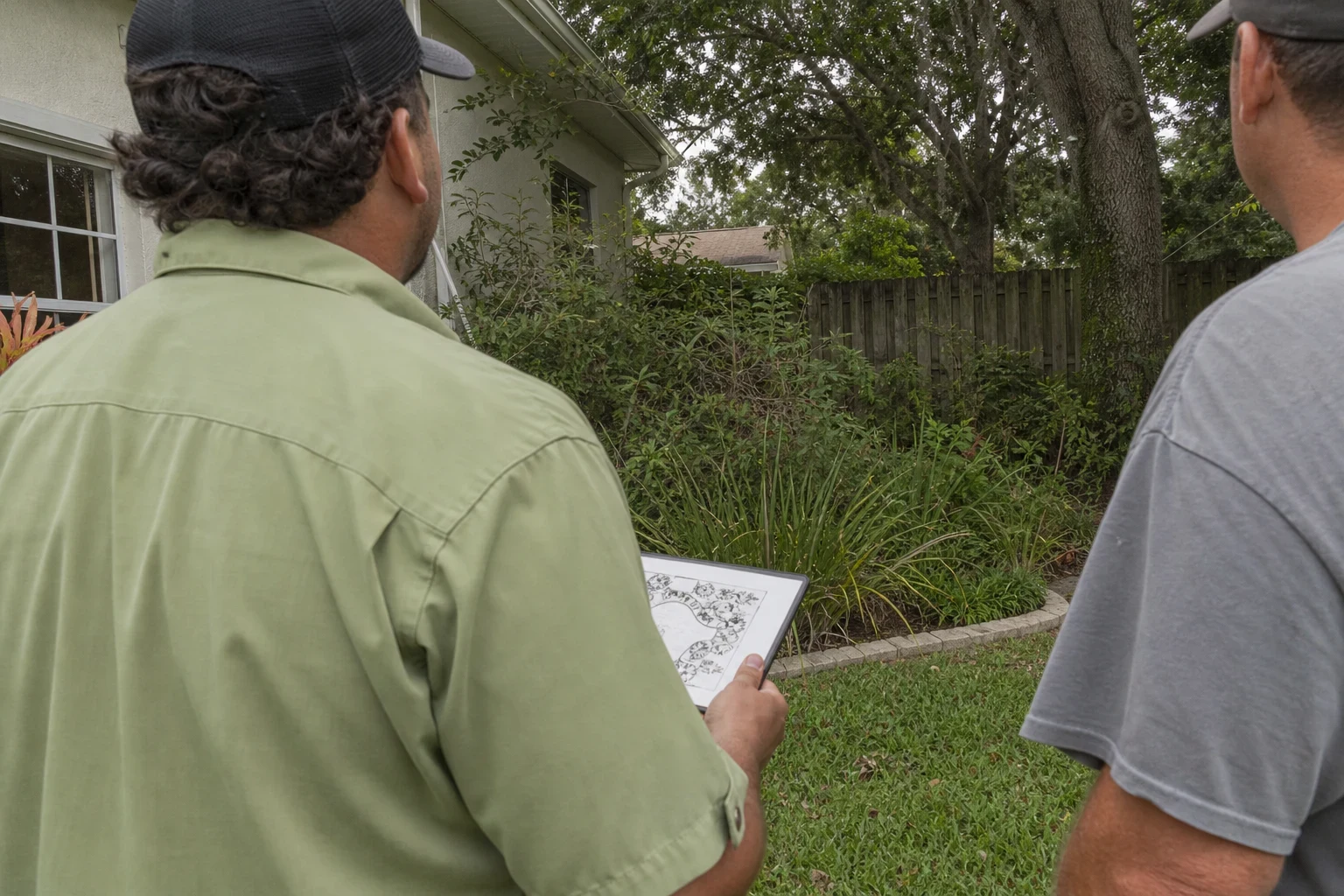
We visit, look at each palm, and give you a written estimate with what we'd cut and what we'd leave. Your call to us gets you this free on-site walkthrough.
- 2
Protecting the property
Before work starts we set drop zones away from pool cages, lanais and beds, and lay down protection where debris could land on pavers or plants.
- 3
Cutting and lowering
We prune by hand from a lift or ladder, without climbing spikes on palms we're keeping, since those wounds never close. Removals are lowered piece by piece.
- 4
Cleanup and next steps
We rake, blow off hard surfaces and haul every frond. If a stump remains, we can schedule stump grinding.
Palm pruning and removal questions
Should I have my palms cut back hard before hurricane season?
No. Stripping a palm to a few upright fronds, often called a hurricane cut, weakens it and leaves the crown more exposed to wind. Removing dead fronds and seed stalks is enough. A full, healthy crown flexes better in a storm.
How often do palms need pruning?
Most palms in the area do well with one or two prunings a year. Queen palms and date palms that fruit heavily may need more. Self-cleaning palms such as royals and foxtails often need little beyond picking up dropped fronds.
A storm knocked fronds off my palm. Is it dying?
Usually not. If the center spear is green and upright, the palm can grow new fronds. A brown, loose spear or a bent crown is the warning sign, and that is worth a closer look.
Is your company covered for work right beside my house?
Yes. We are a family-owned company, business licensed and fully insured, which matters when a palm is being lowered next to your roof or pool enclosure.
Can a palm stump be left in place?
It can. Palm stumps do not resprout, and they soften over the years. Many owners still prefer grinding so they can replant or lay sod in that spot.
Get an honest look at your palms
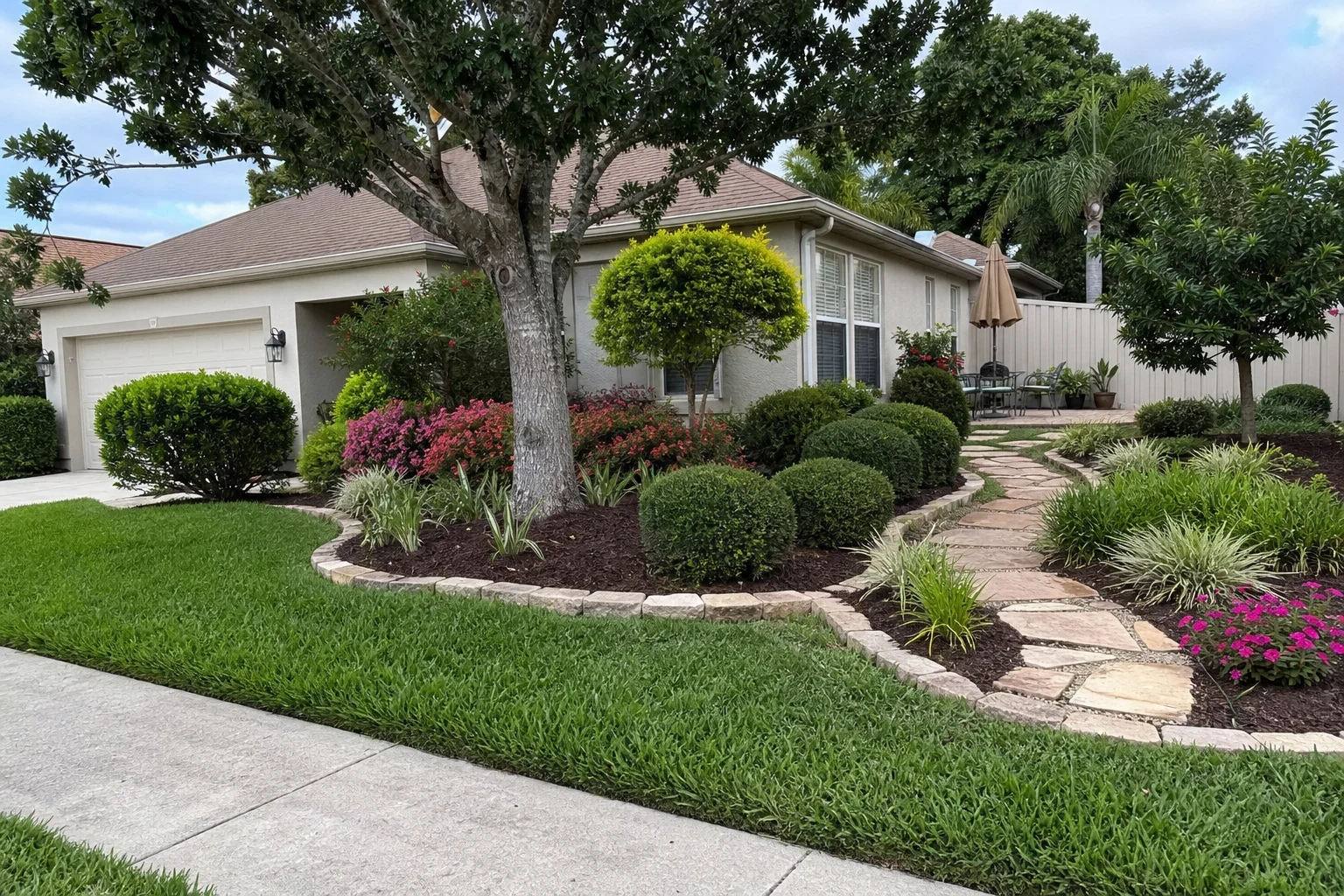
We'll walk your yard, tell you which palms need pruning, which are fine and which should come down, and put it all in writing.