ServicesHardscape Installation
Hardscape Installation in Altamonte Springs
We build paver patios, walkways, driveway borders and low retaining walls that stay level through summer downpours. Each job starts with excavation, a compacted base and a slope that carries water away from your home, so the surface you see lasts as long as the work underneath it.
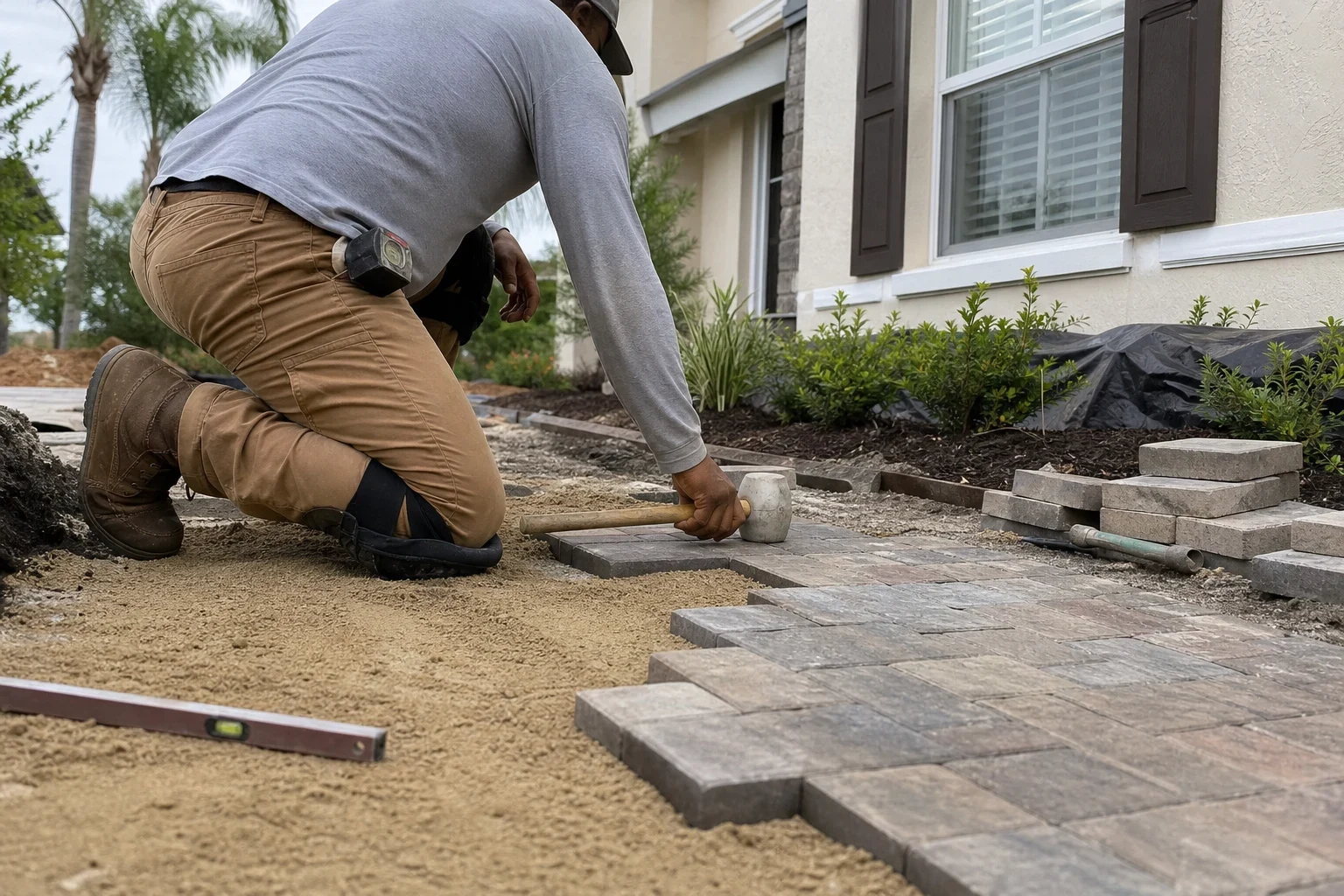
Stone and Pavers Built From the Ground Up
Hardscape is the permanent part of a landscape: the patio you sit on, the path to the front door, the wall that holds a bed in place. Most of its quality is hidden. A patio that sinks, rocks underfoot or grows weeds in every joint usually had too little base, loose sand or no plan for where the water goes.
Our soil here is mostly sand, and it moves when a storm drops several inches of rain in an afternoon. We dig deep enough, compact in layers and set edge restraints so the pavers cannot creep outward. After a hurricane or a hard summer, much of our hardscape work is rebuilding sections that washed out or settled, and we give you a straight answer on whether a repair will hold or a section should be relaid.
We are a family-owned company, business licensed and fully insured, and we treat your driveway, lawn and plantings with care while the work is underway.
What Our Hardscape Work Covers
- Paver patios and pool surrounds
- Concrete pavers, travertine or brick-style units laid in the pattern you choose. Travertine stays noticeably cooler underfoot near a pool, and we will show you samples of each so you can compare color and texture in your own light.
- Walkways and garden paths
- Front entries, side-yard paths and stepping routes through beds. We size them for two people walking side by side where space allows.
- Low retaining and seat walls
- Segmental block walls that hold back soil on a slope or frame a raised bed. Each one gets a gravel backfill and drainage behind it so water pressure does not push it over.
- Driveway borders and extensions
- Paver ribbons and parking pads that widen a driveway without tearing it out. The base for vehicle areas is built thicker than for foot traffic.
- Storm-damage repair and relaying
- Lifting washed-out or sunken sections, rebuilding the base and resetting the original pavers where they are sound. Fresh joint sand and new edge restraint finish the repair.
Signs Your Hardscape Needs Attention
Low spots that hold water
Puddles that sit for hours after rain mean the base has settled or the slope was never right. Standing water also speeds up algae and staining.
Pavers rocking or shifting
A loose paver underfoot is a trip hazard and a sign the edge restraint or bedding sand has failed.
Washout along the edges
After a heavy storm you may see sand spilled onto the lawn and gaps opening at the border. Left alone, the edge keeps unraveling inward.
A retaining wall leaning or bulging
Even a slight lean on a block wall points to water trapped behind it. It is worth having us look before the next rainy season.
Roots lifting a path
Tree roots under a walkway push pavers up in a ridge. We can reroute the path or relay it with root clearance, and our tree trimming and removal crew can help if the tree itself is the issue.
What Shapes the Cost of Hardscape
Every hardscape estimate is built from the site itself, so we price after seeing it rather than by the square foot over the phone. Below are the factors that move the number most. For larger patio and wall projects, some homeowners choose to spread the cost out: we offer financing of up to $100,000, with terms anywhere from two to twelve years and no penalty if you pay it off early.
Size and shape
Square footage matters, but curves, borders and inlays add cutting time and material waste.
Material choice
Standard concrete pavers, travertine and natural stone differ widely in cost and in how they are laid.
Site access and soil
Tight side yards mean more hand work. Soft fill, old concrete or roots under the area add excavation and haul-away.
Walls, steps and drainage
Retaining walls, steps and added drains each bring their own base, block and labor.
Repair versus new build
Relaying a storm-damaged section often reuses the original pavers, which can keep repair costs well below a full replacement.
How a Hardscape Job Runs
- 1
Walkthrough and written estimate
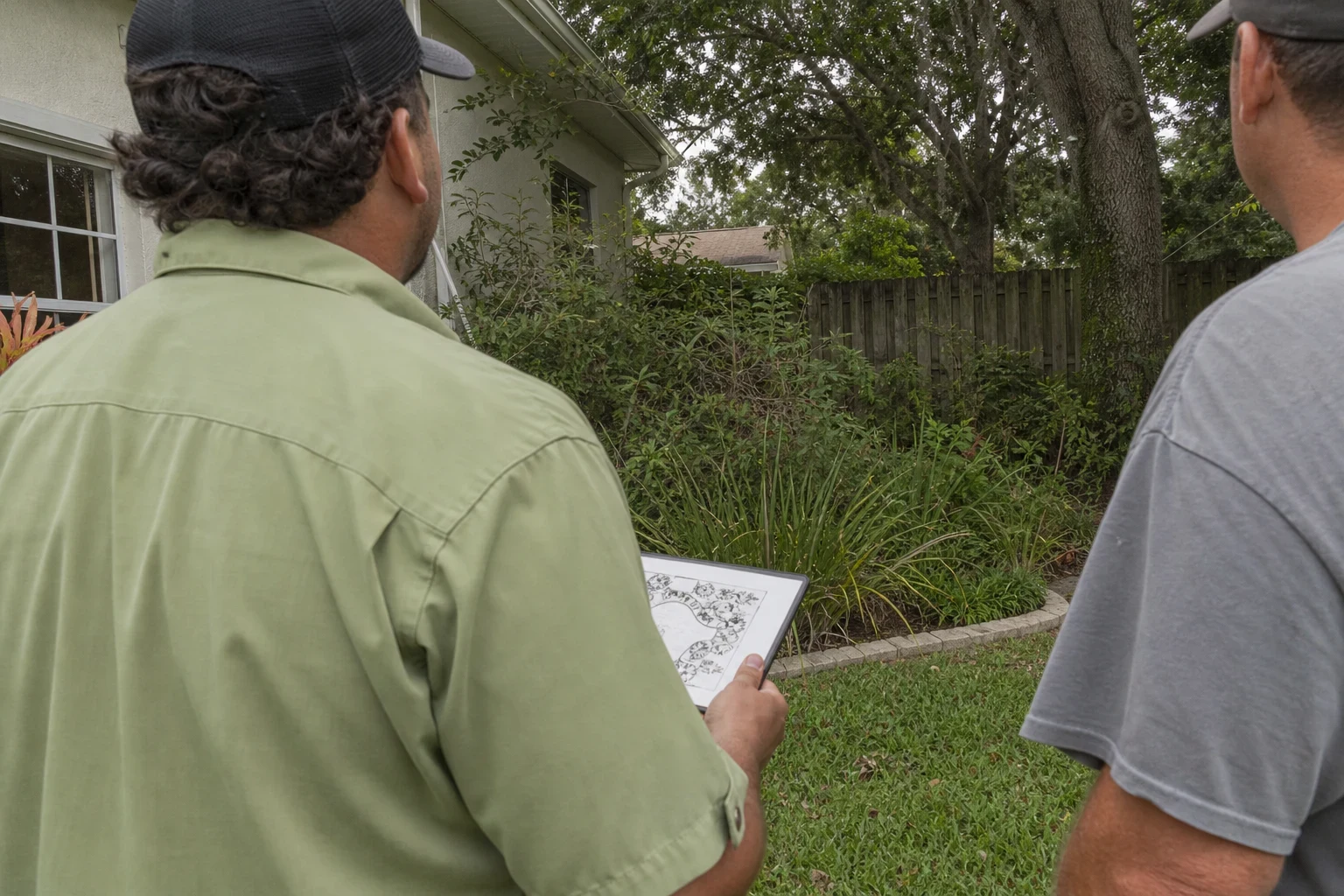
We visit, measure, check the grade and talk through materials and layout. You get a free written estimate with each part of the job listed, plus notes on any HOA approval or permit that may apply.
- 2
Layout and excavation
We mark the shape, call for utility locates and dig out to the depth the use requires. Turf and plants near the work area are protected or set aside.
- 3
Base, compaction and screeding
Crushed stone goes down in lifts, each compacted with a plate compactor, then a level bed of sand is screeded to a gentle slope away from your home.
- 4
Laying, cutting and locking
Pavers are set, edge cuts are made cleanly, and restraints are fixed in place. Polymeric sand is swept into the joints and activated to resist weeds and washout.
- 5
Cleanup and final look
We clear the site, rinse the surface and walk it with you so you know how to care for it through the wet months.
Hardscape Questions We Hear Often
How soon can I use a new patio?
You can usually walk on it the day we finish. Polymeric sand needs dry weather to cure, so we ask you to keep furniture and hoses off it for a day or two. Vehicle areas get a little longer.
Can you fix pavers that sank after a storm?
Yes, and it is one of the most common calls we get. We lift the affected area, rebuild and compact the base, and reset the same pavers so the repair matches. If the damage comes from poor drainage, we correct the slope too so it does not happen again.
Do I need a permit or HOA approval?
Many neighborhoods require HOA approval for patios and walls, and some projects, such as taller retaining walls, may need a city permit. We check what applies to your property during the estimate and help you put together what the HOA asks for.
Will the pavers get slippery or stained?
Shaded, damp areas can grow algae. We slope every surface so water does not sit, and we can suggest a textured paver or travertine where slip resistance matters, such as around a pool.
Can hardscape be part of a bigger yard plan?
It often works best that way. Our landscape design service can lay out the patio, beds and plantings together, and we can follow up with sod installation or mulch and beds once the stonework is done.
Let's Look at Your Patio or Path
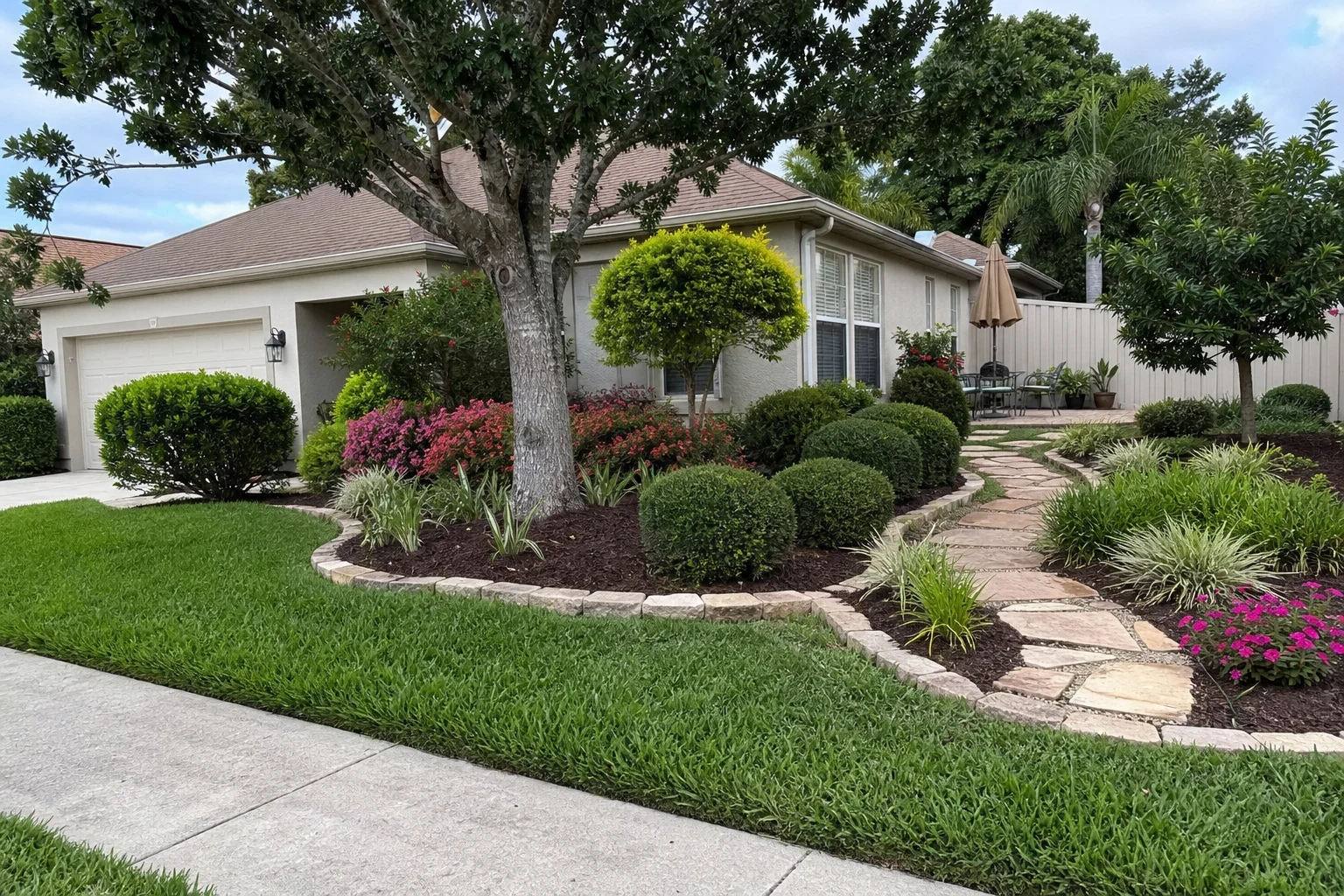
A new patio or a section that washed out in the last storm, we will walk the area with you, explain what we see and put it in writing. There is no charge for the visit.